Hey there, Graphite Ring
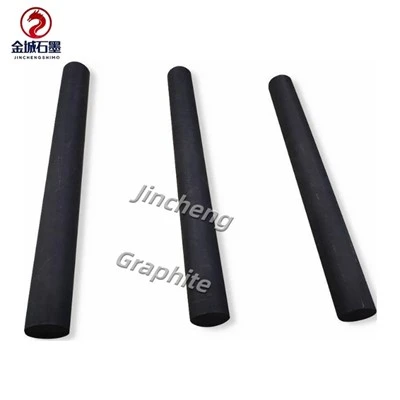
If you’ve ever worked in industries where things get seriously hot—think metal smelting, glass manufacturing, or even aerospace component testing—you’ve probably stumbled across graphite rings. As someone who’s been supplying these bad boys for over a decade, I get asked this question all the time: how the hell do they hold up under high temps? It’s not a black-and-white answer, but let’s break this down like we’re chatting over a coffee (no stuffy lab jargon, promise).
First off, let’s get one thing straight: graphite is weirdly versatile. Most people think of it as the stuff in pencil leads, but that’s a tiny, overpriced version of the real deal. The graphite we use for industrial rings is processed to be dense, machinable, and way more heat-resistant than you’d guess. But here’s the catch—its performance under high temps depends on a bunch of factors, not just “how hot is it?” Let’s start with the basics.
First, what do we even mean by “high temperatures” for graphite rings? For most industrial use, we’re talking 1,500°C to 3,000°C (that’s 2,700°F to 5,400°F, for my imperial crew). Some super niche applications go higher, but that’s the sweet spot for where graphite rings shine. At these temps, most metals would melt like butter, ceramics would crack from thermal shock, and plastics would just… vaporize. Graphite? It doesn’t melt at standard atmospheric pressure. Wait, yeah—its melting point is around 3,600°C (6,500°F), which is insane. So at the temp ranges most operations hit, it’s not going to turn to liquid. That’s a huge win.
But hold up—before you go ordering 100 graphite rings for your furnace, let’s talk about what actually causes them to fail. It’s not just heat itself. The big enemy here is oxidation. Graphite reacts with oxygen when temps go above ~400°C (750°F) to form carbon monoxide or carbon dioxide. So if you’re running a graphite ring in an oxygen-rich atmosphere at 1,000°C, it’s going to slowly eat away, like a candle melting from the inside. That’s why we coat a lot of our rings with things like silicon carbide (SiC) or boron nitride (BN). These coatings act as a shield—they stop oxygen from getting to the graphite core. We’ve seen coated rings last 10x longer in air than uncoated ones. No joke.
Then there’s thermal shock. That’s when a super hot material gets hit with a sudden temperature change—like if you yank a graphite ring out of a furnace at 2,500°C and blast it with cold air to cool it down fast. Most materials would crack or shatter right then. But graphite has this thing called high thermal shock resistance. Why? Because it has a low coefficient of thermal expansion—meaning it doesn’t grow or shrink much when heated or cooled. That means less stress building up in the material, so it’s way less likely to crack. We once had a client who accidentally dropped a hot graphite ring into a bucket of water (oops) and it was still usable. Crazy, right?
Wait, but what about when you’re in a vacuum or an inert gas atmosphere? That’s where graphite really shows off its stuff. No oxygen means no oxidation, so you can crank the temps way higher. In a vacuum, graphite rings can handle temps up to 3,000°C without any issues. That’s why they’re used in things like semiconductor manufacturing, where you need ultra-high temps in a vacuum to etch or deposit materials. We supply a lot of semiconductor shops with graphite rings for their vacuum furnaces, and the feedback is always the same—they last forever in those conditions.
Another factor: purity. Not all graphite is created equal. If your graphite has a bunch of impurities like iron, sulfur, or silicon, those impurities will break down at high temps, causing the ring to degrade faster. That’s why we source our graphite from high-purity synthetic grades, not the cheap stuff from pencil lead factories. We test every batch to make sure impurities are below 10 parts per million (ppm) for most applications. It costs a bit more, but our clients tell us it’s worth it—no unexpected failures mid-production, which saves them a ton of money on downtime.
Let’s talk about real-world examples to make this concrete. Last year, we had a client in the steel industry who was using metal rings in their continuous casting furnace. Those metal rings would warp and fail every 2 weeks, costing them hundreds of thousands in lost production. They switched to our high-purity coated graphite rings, and now those rings last 6 months. No warping, no oxidation, no downtime. Another client is in the glass making business—they use graphite rings to seal their furnace doors, which get up to 1,800°C. Before graphite, their seals would leak, causing temperature fluctuations that ruined their glass batches. Now, the graphite seals are still going strong after 2 years.
But here’s the thing: graphite isn’t perfect. If you’re in a super corrosive atmosphere—like one with chlorine or hydrogen fluoride—graphite can react with those gases at high temps, even with coatings. We’ve had to adjust our coatings for some of these cases, using things like yttria or alumina instead of SiC. It’s all about matching the right graphite grade and coating to your specific environment. That’s why we don’t just sell you a generic graphite ring—we ask questions about your operating temp, atmosphere, pressure, and what the ring is doing (sealing, rotating, supporting) to give you the right product.
I should also mention wear and tear. Even though graphite is hard, it’s self-lubricating. Wait, that’s another weird graphite quirk—at high temps, it gets slipperier, not stickier. So if your ring is rotating or sliding against another part, graphite is way better than metal or ceramic because it doesn’t seize up. We had a client in a turbine manufacturing plant who was using ceramic rings for their high-speed turbine shafts. The ceramic would crack from friction and thermal stress, and the metal would seize. Switched to our high-density graphite rings, and the friction dropped by 40%, and the wear was minimal. They haven’t replaced those rings in 18 months.
Let’s wrap this up so it’s not a novel. So how does a graphite ring perform under high temps? It depends on three main things: 1) the atmosphere it’s in (air, vacuum, inert gas—oxidation is the big one here), 2) the graphite grade and coatings we use (high purity = longer life, coatings = oxygen shield), and 3) the specific conditions (thermal shock, pressure, wear). When you get those right, graphite rings outlast almost every other material out there at temps above 1,000°C.
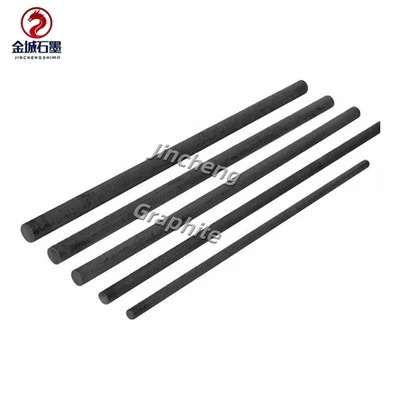
If you’re dealing with high temps and tired of parts failing, let’s chat. We don’t do one-size-fits-all—we’ll help you figure out exactly what graphite ring works for your operation, no pushy sales tactics, just real advice from people who’ve been in this game for years. Whether you need a custom-sized ring for a furnace, a seal for a vacuum chamber, or something for a turbine, we’ve got your back. Just reach out to us to start a conversation about your needs.
Negative Electrode Material Graphite References
- McEnaney, B., & Mays, T. J. (1995). Chemistry and Physics of Carbon, Vol. 24. CRC Press.
- Lee, S. M., & Fujita, T. (2001). Thermal stability of graphite nanoribbons. Physical Review B, 63(23), 233405.
- Diehl, J., & Willich, P. (2007). High-temperature applications of graphite and carbon materials. Carbon, 45(13), 2573-2585.
- American Carbon Graphite Society. (2018). Industrial Graphite Materials: Properties and Applications. ACGS Press.
Huixian Jincheng Abrasive Mold Factory
As one of the most professional graphite ring manufacturers and suppliers in China, we have world-leading production equipment and strong manufacturing capabilities. Please rest assured to buy durable graphite ring for sale here from our factory. Quality products and reasonable price are available.
Address: Mengzhuang Town, Huixian City, Henan Province
E-mail: graphite.jc@gmail.com
WebSite: https://www.graphite-jc.com/
