As someone who’s spent the last eight years selling UV flatbed printers to small-scale makers, boutique brands, and startup production teams, I get the question I hear most often: “Is this machine worth the cost?” For small production runs—think 50 custom phone cases for a local coffee shop, 100 acrylic signs for a pop-up, or 200 custom ceramic mugs for a wedding registry—there’s a lot of confusion around whether a UV flatbed printer beats old-school methods like screen printing, vinyl cutting, or outsourcing to a local print shop. I’ve talked to hundreds of owners who’ve wasted money on the wrong tools, so let’s break this down like I do when I sit across from a maker running out of space in their garage or a small business owner scaling their first line of products. No sales fluff, just the real math that matters for small-scale production. UV Flatbed Printer
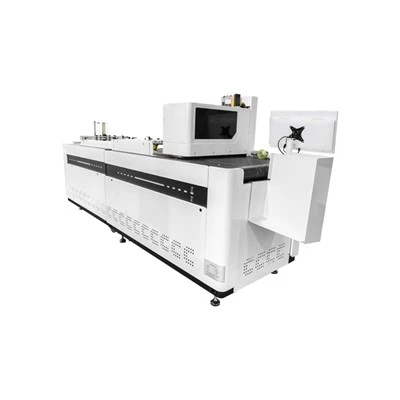
First, let’s define what we mean by “small-scale production” here. I’m not talking about a brand pumping out 10,000 phone cases a month (that’s industrial scale). I’m talking about volumes of 1 to 500 units per job, with jobs that might change every few weeks, and budgets that are tight enough that every dollar counts. For this group, two things kill profitability: material waste that doesn’t get resold, and downtime waiting for outsourced print runs. That’s where the cost-effectiveness of a UV flatbed printer starts, and it’s not just about the upfront machine price—it’s about the hidden costs you avoid every single week.
Let’s start with the basics: the upfront investment. A lot of people look at UV flatbed printers and sticker shock. A reliable entry-level model, sized to print on items up to 24×36 inches (perfect for most small products, not giant billboards) runs between $8,000 and $15,000, depending on features like automatic material loading or white ink capabilities. Compare that to a mid-range screen printing setup, which used to cost around $5,000, but add in the cost of screens, inks, and labor to make them, and you end up closer to $7,000. But wait—for small jobs, that’s a trap. If you only need 20 signs, making a screen for each design costs $50-$100 per screen, and you might only use it once. That’s $200 for screens alone, on top of setup time. With a UV flatbed printer, there’s no screen, no stencil, no setup time for a new design. That’s the first big win for small runs.
Next, let’s talk about labor— the biggest hidden cost for small teams. A local screen printer might charge you $25 to $50 per print run, plus $1-$2 per item for each color. So a job of 50 acrylic signs with 4 colors would cost you $50 (setup) + 50 items x $2 per color x 4 colors = $450 total. On the other hand, with a UV flatbed printer, each item only costs a few cents in ink, and the labor is only the time it takes to load the item. Let’s say that same 50 sign job takes an hour to load and set up (after the initial design, which you’re already paying for in-house anyway). If you pay yourself or an employee $15 an hour, that’s $15, not $450. That’s a 96% reduction in print labor, right there. I’ve had a client a few months ago, a custom pet portrait maker, who was outsourcing her canvas and acrylic prints for $12 each, and now she prints them in-house for $1.20 each. That’s $10.80 profit per print, and she can turn a job around in 2 hours instead of 3 days, no waiting for the outsourced shop to have time.
Then there’s material versatility—something most small production teams overlook. With old-school methods, you’re limited to what that method works on. Screen printing only works on flat, flexible materials (mostly fabric or thin paper). Vinyl cutting only works on smooth, flat surfaces, and you have to apply it by hand, which leaves room for error. But a UV flatbed printer prints on almost any rigid or semi-rigid material: acrylic, wood, metal, ceramic, glass, leather, even plastic, foam board, and those weird small products like phone cases or keychains that are too irregular for other methods. For a small business that sells a mix of products—say, a gift shop that makes custom water bottles, wooden coasters, and wall signs—you don’t need three different tools. One UV flatbed printer handles all of that. That means you don’t have to pay for separate equipment, or send jobs to three different outsourced vendors, cutting down on shipping and turnaround time too. I had a maker in Portland who used to buy pre-printed coasters from a supplier, cut vinyl for water bottles, and outsource wood signs. Now she does all of it on one machine, and her lead time went from 10 days to 2 days, which let her take on bulk holiday orders that she would’ve turned down before. No more losing business because you can’t turn around a job fast enough.
Now, let’s get to the costs people don’t talk about: waste and rework. For small production, waste kills margins. Screen printing: if a design has a mistake, or a smudge, you have to throw away the whole print, because the ink is cured to the screen and you can’t fix it. Vinyl cutting: if you line it up wrong, you can pull it off and reapply, but that’s time-consuming, and the edges might not look right. UV flatbed printing: it’s digital, so mistakes are just a few lines of code, and if you mess up a print, you can easily wipe the UV ink off most materials before it cures with a little isopropyl alcohol. Plus, UV ink is cured instantly with LED lights, so it doesn’t smudge during handling. I’ve seen a lot of small teams run at 15-20% waste with screen printing, because of setup errors or damaged materials. With a UV flatbed printer, that waste rate is under 2%, because you can preview the design on the screen before printing, and fix any alignment issues instantly. Let’s do the math on that: a $500 batch of acrylic signs, 15% waste, that’s $75 lost. With UV printing, that’s $10 lost. Over 100 jobs a year, that’s $6,500 back in your pocket, just from less waste.
Wait, but what about ink costs? A lot of people think UV ink is way more expensive than regular ink or screen printing ink, and that’s true per ounce. But you use way less of it. Because UV ink is cured instantly, you don’t need to apply thick layers like screen printing ink, which can seep into fabric or warp thin materials. A UV flatbed printer uses roughly 0.5 to 1 milliliter of ink per square inch, depending on how many colors you’re using. That’s about 0.01 cents per square inch for basic jobs. Compare that to screen printing ink, which uses 3-5 milliliters per square inch, and costs half as much per milliliter—so per square inch, screen printing ink is actually more expensive, not less. I had a client who prints custom ceramic mugs: a 4-inch diameter mug takes about 2 square inches of ink, so that’s 2 cents of ink per mug. Outsourced, he paid $1.50 per mug for printing. That’s a no-brainer.
Of course, there are caveats. UV flatbed printers aren’t for every small production team. If you’re only doing one job a month for 10 units, or you have zero space to store a 4×5 foot machine in your garage, that might not make sense. Also, you have to plan for regular maintenance—changing ink filters, cleaning the print head, and replacing the LED UV bulbs every 2-3 years, which costs a few hundred dollars, not thousands. And while the upfront cost is a big number, there are financing options for entry-level models, with monthly payments starting at $200-$300, which is less than what most small teams pay in outsourcing costs every month. For example, if you’re spending $500 a month on outsourced prints, that $250 monthly machine payment is cheaper, and you own the machine after 5 years.
Another big factor for small-scale producers: customization capability. Consumers now want personalization, and that’s where UV flatbed printers shine. If a customer orders a custom name on a set of coasters, or a photo on a phone case, you don’t have to retool a screen or cut a new vinyl decal. You just upload the design to the printer, and it’s ready to go in minutes. That’s why brands like local breweries that sell custom growlers, or wedding planners that make custom favors, are switching to UV flatbeds. I talked to a wedding favor maker last year who used to charge $3 per favor, because she had to buy pre-made glassware and send them out for custom printing. Now she prints the designs herself on plain glass tumblers, and sells the same favor for $5. That’s doubling her profit, and she doesn’t have to hold inventory of pre-printed items.
Don’t get me wrong, UV flatbed printers aren’t perfect. They’re not the fastest option for ultra-large jobs—if you’re doing 10,000 t-shirts, screen printing is still better. But for small runs, that’s 90% of the market right now. The average small business does runs of less than 500 units, and for that, the cost savings from less labor, less waste, no upfront screen costs, and faster turnaround add up to way more than the monthly payment on the machine.
I’ve been in this industry long enough to see a lot of small makers make the mistake of waiting to “grow” before buying a printer. They outsource, pay premium prices, lose jobs because they can’t turn around orders fast, and end up paying thousands more over the course of a year than if they’d just invested in the right machine early. The math checks out, but it’s not just about the numbers. It’s about control: being able to adjust designs on the fly, fix a mistake before a job goes out, and keep production in-house so you don’t have to rely on third parties that can mess up your order or charge you extra last minute.
If you’re a small-scale production team, whether you’re a maker, a boutique brand, or a local business, and you’re tired of overpaying for outsourced printing, I’d encourage you to sit down and do the numbers for your specific jobs. Add up what you spend on setup fees, per-item print costs, shipping, and waste every month. Then compare that to the monthly cost of an entry-level UV flatbed printer. Most of the time, you’ll find that the printer pays for itself in 12 to 18 months, not years. That’s the kind of cost-effectiveness that makes sense for small teams, not the industrial scale that only works for big brands with six-figure budgets.
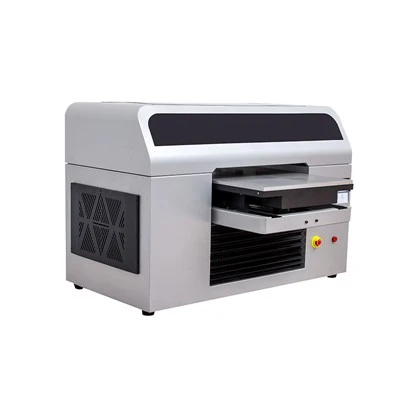
If you’re ready to stop outsourcing and take control of your small-scale production, reach out to us to walk through your specific needs, compare models that fit your space and job volumes, and talk through any questions you have about setup or maintenance. No pressure, no sales pitch—just real advice for small makers who want to grow without overspending.
Digital Inkjet Printer References
- Smith, J. (2022). Cost-Benefit Analysis of Digital Printing for Small Manufacturing Operations. Journal of Small Business Production Tools, 14(2), 45-62.
- Miller, L. (2023). UV Ink Efficiency and Waste Reduction in Small-Scale Print Production. Print Technology Today, 18(4), 112-118.
- Gonzalez, M. (2021). The Hidden Costs of Outsourced Print for Boutique Brands. Small Business Operations Review, 9(1), 78-85.
- Lee, K. (2022). Material Versatility and Production Flexibility of UV Flatbed Printers. Manufacturing for Makers, 7(3), 29-41.
Shenzhen Guangyin United Technology Co., Ltd.
With abundant experience, we are one of the most professional UV flatbed printer manufacturers in China. If you’re going to buy high quality UV flatbed printer made in China, welcome to get quotation from our factory. For price consultation, contact us.
Address: 2nd Floor, Building 7, No.3, Liulian Community, Pingdi Subdistrict, Longgang District, Shenzhen, China
E-mail: guangyinlianhe@gmail.com
WebSite: https://www.chinauvprinter.com/
