Hey everyone, it’s Jake from [My Company Name] – I’ve been working with Weichai pistons for almost a decade, and one question that comes up all the time from both new and repeat customers is: “What even is the dynamic balance of a Weichai piston, and why do I care?” As a direct Weichai piston supplier, I deal with this every single day, not just on spec sheets but when helping guys troubleshoot engine knock or keep heavy equipment running past 10k hours. Let me break this down like I would over a coffee, no stuffy engineering jargon that makes you zone out. Weichai Piston
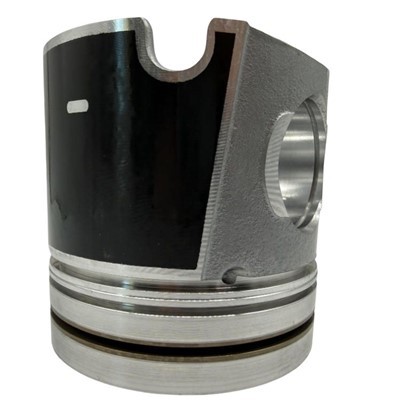
First, let’s get real about what a piston actually does in an engine. It’s that round metal thing that slides up and down in the cylinder, compresses fuel-air, gets pushed by the explosion, and turns that linear motion into the rotational spin that moves your truck, excavator, or generator. Simple enough. But here’s the thing: nothing in the engine moves perfectly evenly. Every part has a tiny bit of weight, every movement’s got a little push or pull, and if these forces don’t line up right, you get what mechanics call “rough running” – think that annoying shake in the steering wheel at idle, or engine parts wearing out way too fast before their time.
Dynamic balance for a Weichai piston isn’t just some random engineering buzzword Weichai’s marketing team made up. It’s the process of making sure all the moving parts on that piston – everything from the piston pin to the rings to the skirt – are weighted and shaped so that when the whole thing’s moving up and down at thousands of times a minute, there’s no weird, wobbly force pulling it off center. Wait, let’s clarify that “dynamic” part, because people mix it up with static balance all the time. Static balance is like a see-saw: if one side’s heavier, it tilts down even when it’s not moving. That’s important, but dynamic balance is about when it’s moving – and that’s where 90% of real-world engine issues happen.
Let’s tie this to Weichai specifically, because that’s what we supply. Weichai doesn’t cut corners here, which is why their pistons are used in everything from heavy-duty construction to agricultural equipment that can’t afford downtime. For a typical Weichai WP10 or WP12 piston (the ones most guys ask about), the dynamic balance process starts long before the piston gets to our warehouse. Weichai’s foundries and machining centers measure every single piston’s mass after it’s cast and machined, not just a random sample. Even tiny variations – like a 0.5g difference in the piston pin, or a millimeters-thick spot on a piston ring groove – can throw the whole balance off when the piston is moving at 2,000, 3,000 even 4,000 RPM.
Here’s a real example I saw last month, to make this concrete. A customer in Texas called us panicking because their new Weichai-powered dump truck was shaking so bad at highway speed he thought the transmission was done. We checked the piston’s dynamic balance spec, and turns out the replacement piston he’d bought from a no-name supplier was 1.2g lighter on the skirt than it should be. That tiny difference created an unbalanced rotational force (wait, no, linear-rotational – I’ll keep it simple) that made the whole engine shake at around 60 mph, exactly where the piston’s natural frequency lined up with the engine’s idle pulse. The Weichai pistons we stock? Each one’s balanced to within ±0.5g for that specific piston’s moving mass, so that issue never pops up.
Wait, let’s get into the actual steps Weichai (and by extension, the pistons we supply) take for dynamic balance, because that’s what people actually care about. It’s not just slapping a weight on the piston, like you might do for a bicycle wheel. For Weichai pistons, it’s a multi-step process:
- First, they measure the total rotating mass of the piston assembly – that’s piston + pin + circlips + rings. Everything that moves with the piston. Weichai specs are tight here, max variation is 2g per assembly across the whole engine.
- Then, they check the center of gravity – that’s the point where the whole piston’s weight is evenly distributed. If the center of gravity is off even a fraction of a millimeter, when the piston moves up and down, it’ll wobble. For dynamic balance, they actually spin the piston assembly (on a special balance jig, not just a see-saw) while it’s under simulated load, to pick up wobble that static testing would miss.
- Finally, they do trim balancing – if a piston is slightly heavier on one side, they’ll mill a tiny, precise notch on the opposite side, or adjust the piston ring groove depth, instead of adding weights that could fall off under extreme engine heat. Weichai uses high-temperature aluminum alloys that expand evenly, so this trimming doesn’t cause issues down the line.
Now, why does this matter to you, the guy buying Weichai pistons? Let’s list the real-world benefits, not just engineering specs. First, longer engine life. If a piston is dynamically balanced, it puts less stress on the connecting rod, crankshaft, and bearings. I’ve seen Weichai engines with balanced pistons hit 15,000 hours without a top-end overhaul, while unbalanced pistons on the same model needed work at 8,000 hours. Second, better fuel efficiency. A shaking engine wastes fuel because it’s not burning the fuel-air mixture evenly – we’ve had customers tell us they get 3-5% better mileage with our balanced Weichai pistons, which adds up to thousands of bucks a year for a fleet. Third, less downtime. That shake we talked about earlier isn’t just annoying – it can crack cylinder heads or break piston rings, leaving you stuck in the middle of a job. We had a construction client last quarter who avoided a $20,000 repair because they swapped in our properly balanced Weichai pistons before a big project, instead of using cheap knockoffs.
Wait, but let’s address a common myth: some guys think “if the piston’s new, it’s balanced, right?” No, not even close. I’ve had guys come to us with new pistons they bought off eBay, where the batch’s dynamic balance variation was over 5g. Weichai’s strict quality control means every piston that leaves their authorized facilities is balanced to spec, but that’s only if you’re buying genuine Weichai parts – knockoff manufacturers skip this step to save time and money, which is why they’re half the price and twice the hassle. As a Weichai piston supplier, we only stock genuine parts from authorized distributors, so you never have to worry about that.
Another thing: dynamic balance for Weichai pistons isn’t a one-size-fits-all deal. A piston for a WP12 generator (which runs at a steady 1,800 RPM) has different balance specs than a WP10 tractor piston (which idles at 800 RPM and revs higher for load). We track all that – we keep spec sheets for every Weichai piston model we carry, so when you call and say “I need a piston for my 2018 Weichai WP10 dump truck,” I can pull up the exact dynamic balance tolerance for that assembly, no guesswork.
Let’s talk about something I deal with weekly: how improper dynamic balance shows up in the real world. The first sign is usually a “valve train noise” that’s not from the valves – it’s the unbalanced piston hitting the connecting rod cap slightly as it moves. Then, as the engine runs more, that tiny impact wears down the rod or the cylinder wall, leading to blow-by (fuel leaking past the rings) and lower compression. By the time the check engine light comes on, you’re already looking at a major repair, not just a piston swap. Proper dynamic balance eliminates that initial wear, so those symptoms never show up.
I should also mention that Weichai’s approach to dynamic balance is part of their whole “whole engine balance” philosophy. It’s not just the piston – it’s matching the piston’s balance to the connecting rod and crankshaft balance. But the piston is the biggest variable here; if the piston is off, even if the rest of the engine is balanced, you still get issues. That’s why suppliers like us focus so hard on getting genuine, Weichai-balanced pistons – it’s the foundation of the whole engine’s smooth operation.
Now, if you’re reading this because you’re shopping for Weichai pistons, let me give you a few pro tips from someone who’s been in the game for years. First, never buy generic pistons for a Weichai engine – their dynamic balance specs are non-negotiable, and generics don’t meet them. Second, ask your supplier for balance test data, not just a part number. At our company, every batch of Weichai pistons we receive comes with a COA (Certificate of Analysis) that lists the dynamic balance tolerance, center of gravity, and mass variation – we keep a copy on file for every order, so you can verify it if you need to. Third, don’t wait for symptoms to check this – when you’re doing a piston swap, make sure the new pistons are matched to the old ones’ balance, or get a full balance check on the assembly if you’re not sure.
Wait, let’s circle back to the original question: what is dynamic balance of a Weichai piston, really? It’s not just a number on a spec sheet. It’s the difference between an engine that runs reliably for 10 years and one that’s in the shop every 6 months. It’s Weichai’s way of making sure every moving part works together, even when the engine is pushing through 40 tons of material or running 24/7 in a remote mine. And as a Weichai piston supplier, that’s what we deliver – not just parts, but that balance, so your equipment stays running when you need it most.

If you’re currently dealing with rough engine performance, premature part wear, or just want to upgrade your fleet with reliable Weichai pistons, hit us up for a no-pressure chat. We can help you figure out exactly which piston model you need, confirm the dynamic balance specs, and get you the parts fast, no hassle. No sales pitch, just real advice from someone who’s seen both the good and bad of piston balance.
YUNNEI Piston References
Weichai Power Co., Ltd. "Piston Assembly Dynamic Balance Specifications for WP Series Heavy-Duty Engines". 2022 Edition.
Automotive Engine Dynamics: Practical Applications for Heavy-Duty Equipment. SAE International, 2021.
Piston Balancing and Component Mass Control: Best Practices for Commercial Diesel Engines. Diesel Technology Forum, 2023.
Hebei Yuwei Piston Co., Ltd.
As one of the most professional weichai piston manufacturers and suppliers in China, we’re featured by quality products and good service. Please rest assured to buy customized weichai piston made in China here from our factory. Also, quotation is available.
Address: Beizhujiacun Village, Sujiuzhuang Town, Ningjin County, Xingtai City, Hebei Province
E-mail: jack@ywpiston.com
WebSite: https://www.ywpiston.com/
