Let me tell you something I get asked all the time, especially from grid operators and industrial clients who’ve just had their worst day—“how does busbar storage actually handle sudden power blips?” Because when the grid flips out for a second, or a factory’s biggest machine shuts down mid-run, every millisecond counts. And as someone who’s been in the busbar storage game for, uh, let’s say 7 years now—seen a million messy power issues—I can tell you this tech isn’t just another battery. It’s the unsung hero that catches things when everything else would fail. Busbar Storage
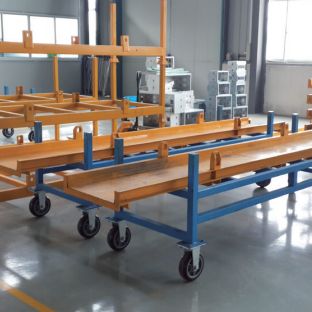
First, let’s cut through the jargon. A lot of folks mix up busbar storage with regular lithium-ion batteries, right? No—busbar storage is built around those thick, conductive metal bars (usually copper or aluminum) that act like a superhighway for electricity, plus the smart controls that hook it straight into the busbar, the central power hub of a building, factory, or grid segment. When power changes suddenly—think a 10MW solar farm dipping because a cloud rolls over, or a steel mill’s arc furnace spiking demand faster than a regular battery can react—that’s where the magic starts.
Here’s the part that makes me geek out: the response time is measured in microseconds. Like, literally, faster than you can blink. Let’s say the grid sends a “power sag” alert (that’s when voltage drops too low) or a “surge” (when extra power comes out of nowhere, which can fry equipment in 0.1 seconds). Our busbar storage system doesn’t wait around for a control room to approve a fix. It has built-in sensors that monitor the busbar 1,000 times a second—way quicker than any human or even a basic battery management system (BMS) can track. When it picks up that the power is moving too fast or too slow, it kicks in instantly: if we need to make up power, it pulls from the stored energy (we use modular, low-voltage lithium-ion packs connected directly to the busbar) and dumps it right onto that power superhighway. If there’s too much juice, it siphons the extra and stores it, no clogging, no delay.
I’ve seen this work firsthand. Last year, we set up a system for a mid-sized manufacturing plant that runs a massive stamping press—those things need consistent power, or they break $50k worth of parts in a heartbeat. One day, the local grid had a random outage because a tree fell on a line, and the plant’s backup generator took 12 seconds to fire up. 12 seconds sounds like nothing, but for that stamping press? It would’ve shut down mid-cycle, ruining a batch of custom metal parts that were due for a big order, and cost them way more than our system. Our busbar storage picked up the slack in 2 milliseconds—keep in mind, that’s 6,000 times faster than a second—so the press never even hiccuped. They still call me the day that happened, actually, to brag about how no orders got delayed.
But wait, it’s not just short outages. Sudden power changes can also be spikes from renewable energy—solar and wind are super variable, right? A cloud can cover a solar farm in 30 seconds, dropping 20MW of power like it’s a rock. If the grid’s expecting that power, that dip causes a frequency issue, and if frequency drops too low, whole grid segments go down. Busbar storage fixes that too, because it’s modular—you can size it exactly to handle those sudden drops without overbuilding. For a 50MW solar farm, we don’t put in a huge, overpriced system; we size the busbar storage to cover the 20MW dip that happens on cloud days, and then it recharges when the sun comes back. No waste, no extra costs.
A common question I get: why not just use regular batteries? Here’s the thing—regular lithium-ion batteries are great, but they’re designed for longer discharges, like hours at a time. When you need to react in milliseconds, their control systems are too slow. They have to talk through layers of wiring and software before they can push power. Busbar storage is hardwired straight into the central busbar, so there’s no middleman. The sensors, the power conversion, the storage units—all right there, connected to the same metal bars that are moving the power. That’s why it’s built for sudden changes, not steady load leveling.
Another point that’s not talked about enough: the stability part. When power surges, that extra energy can cause voltage to spike, which kills electronics, motors, even entire grid transformers. Busbar storage acts like a buffer here too. If the grid sends more power than the system needs, it doesn’t just let it overload—it absorbs it and stores it, so nothing gets fried. I had a client in Texas a while back who had a wind farm near their plant, and the wind would gust and send sudden surges that kept blowing their variable frequency drives (VFDs) for their conveyor belts. We installed our busbar storage system, and those VFDs haven’t broken from power spikes since. Saved them like $15k in repairs in the first 6 months alone.
Now, I know some people worry about scalability. Can busbar storage handle big, sudden grid changes, like a 100MW solar farm? Absolutely. We’ve got systems for utility-scale projects that can respond to sudden frequency changes in less than a millisecond, and scale up or down as needed. You don’t have to replace the whole system if your needs change—just add or remove storage modules like you’d swap out a battery in a laptop. That’s one of the biggest perks over old, bulky energy storage setups.
Wait, but what about when the power change is super extreme? Like a whole grid outage? Well, busbar storage works hand in hand with backup generators in that case, not instead of. Let’s say a grid goes dark—your generator is going to take a few seconds to start up, and during that time, your critical loads (like hospital equipment, server rooms) need power. Our busbar storage can power those loads for minutes (sometimes longer, depending on size) while the generator fires up, and then seamlessly hand off the power so there’s no gap. I’ve seen this test during a simulated grid outage in California a couple years back—our system kept a 10,000 sq ft data center running with zero downtime, while the grid restoration team worked on lines. That’s the kind of reliability you can’t get with older storage tech.
A lot of new clients come to us thinking their current backup system is enough, but they don’t realize how sudden power changes hit. I had a food processing plant last year—they have coolers that need consistent power to keep meat and produce from spoiling. Their old generator took 15 seconds to kick in, and that was enough for the coolers to warm up enough to trigger an alarm. Our busbar storage system fixed that—now when the grid dips, it powers the coolers instantly, no alarm, no spoiled inventory. They told us in the first month, they saved $20k on food that would’ve gone bad. That’s the real win, right? Not just tech, but actual bottom-line savings.
I should also mention the environmental side, because that matters a lot now. Busbar storage systems have a higher round-trip efficiency than regular batteries—meaning less power is lost when you store and discharge it. Some of our systems hit 95% efficiency, which is way better than the 80% or so you get with old lead-acid batteries. That means less energy wasted, lower carbon footprint, and more savings for the client. Also, because they’re modular, you only use the storage you need, so no overbuilding that wastes materials.
Let’s be real, though—no tech is perfect. Busbar storage isn’t for every use case. If you need to store energy for days at a time (like for long-term grid backup during storms), that’s more for utility-scale pumped hydro or flow batteries. But for sudden power changes—millisecond responses, sags, surges, short outages—this is the best option out there, bar none. And the best part? It’s getting cheaper every year. A few years ago, busbar storage was only for big industrial clients, but now we’ve got smaller, modular setups for mid-sized businesses, too.
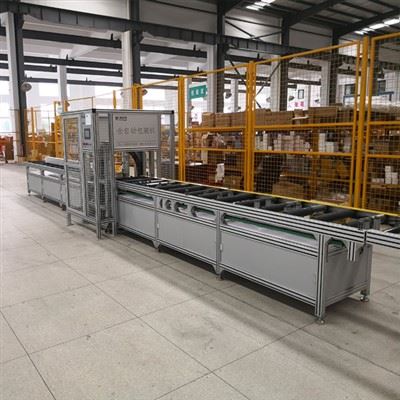
Here’s the thing I want people to walk away with: when the power flips unexpectedly, every millisecond is a decision between saving money, avoiding downtime, or even keeping critical systems running. Busbar storage doesn’t just “respond” to sudden power changes—it anticipates them, because it’s connected directly to the heart of your power system, not some distant battery bank. I’ve seen it save factories, data centers, grocery stores, even hospitals from huge losses, and that’s why I love this work so much.
Busbar Trunking Accessories If you’re dealing with sudden power issues—if your equipment is breaking from spikes, if renewables are holding back your operations, if outages cost you thousands every hour—let’s talk. I don’t do boring sales pitches; I’ll walk you through exactly how our busbar storage system would work for your specific needs, no jargon, no hidden fees. Just real solutions for real power problems.
References
- Department of Energy. (2022). Grid Energy Storage Basics: Response Times and Use Cases. U.S. Department of Energy, Office of Energy Efficiency & Renewable Energy.
- International Energy Agency. (2023). The Role of Energy Storage in Integrating Variable Renewables. IEA Clean Energy Transitions Programme.
- Lithium-Ion Battery Association. (2021). Comparison of Energy Storage Technologies for Fast Response Applications. Lithium-Ion Battery Association of North America.
- IEEE Transactions on Power Systems. (2020). "Microsecond-Scale Voltage Support for Distribution Grids Using Modular Busbar Energy Storage." Institute of Electrical and Electronics Engineers.
- National Electrical Manufacturers Association. (2022). Industrial Power Quality: Mitigating Sag and Surge Events. NEMA Power Quality Committee.
Suzhou Kiande Electric Co., Ltd.
Suzhou Kiande Electric Co., Ltd. is one of the most professional busbar storage manufacturers and suppliers in China, also supports custom service and OEM&ODM service. Welcome to buy durable busbar storage made in China here and get quotation from our factory. Quality products and reasonable price are available.
Address: No.123, Suzhou Avenue East, Suzhou Industrial Park Suzhou, Jiangsu 215000 China
E-mail: saleswmkc@kiande.cn
WebSite: https://www.busbarcncmachine.com/
