Hey everyone, if you’ve ever tried to install a new washing screening unit and spent way too long rearranging your plant because you didn’t account for the right space—raise your hand ????♀️. As a washing screening equipment supplier, I’ve seen this mistake more times than I can count: a customer picks out the perfect machine for their debris or material, gets it delivered, and suddenly realizes they have zero room to hook up the hoses, pull out the screen mesh for cleaning, or even get a forklift in to load/unload material. Today, let’s break down exactly what installation space you actually need—no jargon, just real talk from someone who deals with this every single day. Washing Screening Equipment
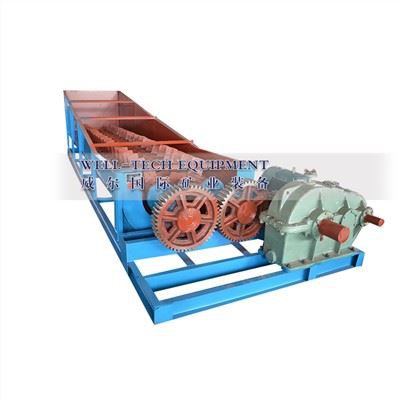
First, let’s start with the basics: not all washing screening equipment is built the same. A tiny tabletop unit for a small construction shop’s leftover gravel isn’t going to need the same space as a full industrial-scale unit for a mining operation that processes 100 tons of rock an hour. So I always tell customers to check two numbers first: the actual dimensions of the machine itself (length, width, height) and the “operating clearance” around it. That’s the stuff no one thinks about until they need it.
Let’s get specific. Take our most popular mid-sized model, the WS-150, which is used by landscaping companies and small aggregate producers. The machine itself is about 8 feet long, 5 feet wide, and 7 feet tall. But here’s the thing: you can’t just plop that down and call it a day. For the infeed side—where you dump your raw material or hook up a conveyor belt—you need at least 4 feet of extra space in front of the infeed hopper. Why? Because if you’re feeding material with a loader or a forklift, you need room for the vehicle to maneuver, plus space for any auxiliary equipment like a feed hopper or a magnetic separator to pull out metal junk before it hits the washing screens. I’ve had a customer tell me they skipped that extra 2 feet, and their loader driver had to back up into a pile of sand mid-feed—total disaster, cost them half a day of production.
Then there’s the discharge side. Depending on what you’re screening, you might have two or three discharge chutes for different sized materials (like fine sand, medium gravel, and debris). Each chute needs at least 3 feet of space on the side to put a stockpile bin or another conveyor to carry the material away. If you’re washing really dirty material, like construction debris with mud or concrete dust, you might also need a space for a sump tank or a water recycling system next to the main machine. That adds another 2 to 3 feet minimum, so don’t forget water-related gear if your unit uses a lot of H2O.
Now, what about the big industrial units? Our WS-500 model is for large mines and processing plants, and it’s a beast—about 25 feet long, 10 feet wide, 12 feet tall. For these, the clearance requirements go way up. Infeed space needs to be at least 10 feet so that the long conveyor belt feeding the unit can be aligned properly, and you have room for a control panel that keeps an eye on the machine’s speed and water pressure. On the discharge side, each of the 4 chutes needs 4 to 5 feet, and you’ll need a whole separate 8×8 area for the water treatment system (clarifiers, filters, pumps) because those big units use thousands of gallons of water an hour. Pro tip: for these big units, make sure the space you’re using is rated for heavy equipment? Wait, no—wait, the machine itself only weighs, like, 15,000 lbs, but the forklift that unloads it needs a 12-foot wide access path to get into your plant or site. I’ve seen facilities with 10-foot wide doorways that couldn’t fit our WS-500 delivery truck’s liftgate—total hold-up.
Wait, there’s one area people almost never forget, but almost: maintenance space. Washing screening equipment gets dirty—mud, debris, mineral dust, all that gunk builds up on the screens, the spray nozzles, and the internal parts. You’re going to need to pull out the screen mesh at least once a week (sometimes daily, if you’re processing super dirty material) to clean or replace it. For that, you need at least 3 feet of clear space on both sides of the unit near the screen access panels. If you cram the machine against a wall, you’ll have to take apart half the machine just to get the screen out. I once had a customer who did that, and it took their maintenance team 3 hours to change a screen that should’ve taken 20 minutes. That’s lost production time—money out of their pocket, and something we always warn about.
Also, don’t forget overhead clearance. A lot of these units have top-mounted spray bars or screen adjustment mechanisms that stick up. Even if the machine is 7 feet tall, the spray bars might add another 2 feet, so if you have overhead pipes, beams, or a ceiling in your facility, you need at least 10 feet of overhead clearance. I worked with a recycling plant a few months back that had a 8-foot ceiling in their processing bay—they ordered a unit and didn’t check, and the spray bars hit the ceiling every time the machine vibrated. They had to cut down the spray bars, which ruined their water pressure and made the washing less effective. Total avoidable mistake.
What about smaller setups? Like if you’re a hobbyist or a small landscaping company doing on-site screening? Our compact WS-50 is only 3 feet long, 2 feet wide, 3 feet tall. For these, you can get away with as little as 2 feet of clearance on all sides, plus the infeed discharge space (1 foot each, max). But even then, if you’re moving it around on a trailer, you need a 6-foot wide path to maneuver the trailer into your site.
Now, let’s talk about variables that change everything. First, material type. If you’re screening light, dry stuff like wood chips, you don’t need a lot of space for water gear, so you can save some room. But if you’re screening wet, dense material like mud-caked concrete or wet gravel, you need way more space for the water pumps, sumps, and maybe even a drying conveyor after the unit. Second, production rate. The faster your unit runs, the bigger the stockpiles of material will be, so you need more space on the discharge side to avoid overflow. We have a customer who runs their unit 24/7 screening sand for concrete, and they added 10 extra feet of space on the discharge side so they can have two bins at once—they don’t have to shut down to switch bins, which saves them thousands a month.
Another thing: utility hookups. Your washing screening equipment needs power (electric or gas) and water, right? The control panel and power hookups should be within 10 feet of the unit, and the water inlet should be easy to reach without running a hose all across your floor. So make sure the space you’re allocating has access to your main power and water lines, or plan to extend them— but don’t count on being able to run them around the machine, that adds to your total needed space.
Wait, let’s throw in a quick checklist I give every customer, because that’s the easiest way to remember:
- Machine dimensions (LxWxH) – write these down for the unit you’re looking at
- Infeed clearance: 3-10 feet (bigger units = more)
- Discharge clearance: 2-5 feet per chute (add more for extra conveyors/bins)
- Maintenance clearance: 3 feet on all side access panels
- Overhead clearance: 10 feet minimum, more if you have top parts sticking out
- Auxiliary space: water system, power hookup, feed equipment (2-8 feet depending on size)
- Access path for delivery: 12 feet wide minimum for forklifts/trucks
I know this sounds like a lot, but it’s way better than having to rent a crane to move your new machine because it’s stuck in a corner, or missing production time because you can’t get to the screen to clean it. Here’s the thing: we don’t just sell you a washing screening equipment—we help you make it work for your space. If you’re not sure what size you need, or how much space your facility has, just shoot us a message. We’ve installed units in tiny 10×20 backyards and massive 100×200 industrial bays, so we’ve seen every possible setup.
Wait, one last horror story to drive this home. A few months back, a guy from a small construction supply shop ordered our WS-100 (mid-sized, 12 feet long). He measured the machine’s length, plopped it down along a wall, and thought that was it. But he forgot the maintenance clearance on the side where the screen access panel is. The panel was right against the wall, so he couldn’t pull it out to clean the screen. He had to pay a technician to come out and modify the access panel, which cost him $800 and two days of downtime. That’s a $1,000+ mistake just because he skipped 3 feet of space. Don’t be that guy.

At the end of the day, the installation space for washing screening equipment isn’t one-size-fits-all. It depends on your machine size, what you’re processing, how much you’re running it, and the auxiliary gear you need. The key is to overestimate a little—better to have extra room than to be cramped and deal with avoidable headaches. If you’re in the market for a new unit, or just want to run the numbers to see if your current space works, reach out. We’ll walk you through every step, give you exact measurements, and make sure your installation goes smooth. No surprises, no extra costs, just a machine that works the way it’s supposed to.
Gold Smelting Furnace References:
- Construction Equipment Association. (2022). Installation and Site Preparation Guidelines for Aggregate Processing Machinery.
- Occupational Safety and Health Administration (OSHA). (2021). Machine Guarding and Maintenance Space Requirements for Industrial Processing Equipment.
- Global Water & Environmental Federation. (2020). Water System Integration for Solid Washing and Screening Operations.
Jiangxi Well-tech International Mining Equipment Co., Ltd.
Jiangxi Well-tech International Mining Equipment Co., Ltd. is one of the most professional washing screening equipment manufacturers and suppliers in China, featured by quality products and good service. Please rest assured to wholesale customized washing screening equipment at competitive price from our factory.
Address: Guzhang Industrial Park of Shicheng County, Ganzhou City, Jiangxi Province, China
E-mail: mily@benefication.com
WebSite: https://www.cn-welltech.com/
