If you’ve ever stood next to a construction compressor on a worksite – the kind that powers jackhammers, nail guns, and concrete breakers for 10 or 12 hours straight without pausing – you’ve probably noticed a few things: it’s loud, it’s hot, and every part of it feels built to take a beating. As a supplier of construction compressors, I get asked questions all the time about what makes these machines run consistently, especially when they’re pushing through brutal summer heat or long shifts. One question that comes up more than any other is about intercoolers in two-stage construction compressors. A lot of operators and even small construction managers see the intercooler as just another metal box attached to the compressor, but it’s actually one of the most critical parts that keeps your compressor from breaking down, boosts its performance, and saves you money on worksite time and fuel. Today I want to break down exactly what role the intercooler plays, especially in the two-stage compressors we supply for construction, and why it’s not a part you want to cut corners on. Construction Compressor
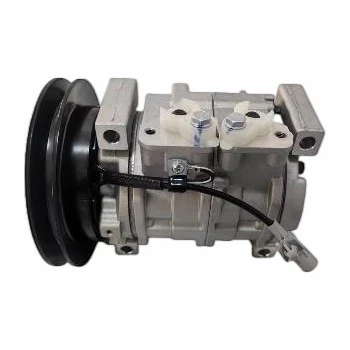
First, let’s start with how a basic single-stage construction compressor works, because that sets the stage for why two-stage compressors, and their intercoolers, matter so much. A single-stage compressor pulls in outside air, squeezes it all at once from atmospheric pressure (about 14.7 PSI) up to whatever pressure you need for your tool – usually between 90 and 150 PSI for construction work – and then sends that hot, high-pressure air straight to your hose. Sounds simple enough, right? But here’s the thing: when you squeeze air, it heats up. A lot. In a single-stage compressor, that compressed air can hit 300 to 400 degrees Fahrenheit. That’s hotter than the surface of a hot asphalt shingle on a summer day, and enough to cause problems the second you use the compressor. For construction, that problem is even bigger because worksites rarely have ideal conditions. If you’re working in Phoenix in July, where ambient air can hit 115 degrees, that single-stage compressor’s compressed air is closer to 500 degrees. That heat doesn’t just make the air coming out of your hose too hot to hold (trust me, I’ve seen a guy grab a hot hose by accident and go down for the count) – it actually ruins the compressor’s efficiency, shortens its lifespan, and makes every tool it powers work less effectively.
Now, two-stage construction compressors fix most of those single-stage problems, and the intercooler is the key component that makes that work. Let’s walk through the two-stage process step by step, because once you see the order of operations, the intercooler’s role makes perfect sense. A two-stage compressor has two separate compression chambers, or cylinders, right? The first step is called low-stage compression: it pulls in ambient air, squeezes it up to a moderate pressure – usually between 100 and 150 PSI – and that air is now hot, just like in the single-stage setup. Instead of sending that hot air straight to your tools, though, it flows to the intercooler, mounted between the low-stage and high-stage compression cylinders. The intercooler does exactly what its name sounds like: it cools the compressed air from the first stage down to a temperature much closer to the original ambient air, usually within 10 to 20 degrees of the air outside. So if ambient air is 85 degrees, the intercooler cools the first-stage air to around 95 degrees, not 350 degrees. Then that cool, still moderately pressurized air goes to the high-stage cylinder, where it gets squeezed again up to your required working pressure – 150 PSI, 175 PSI, whatever your job needs. That second compression step is way easier on the compressor, because it’s working with cool, dense air instead of hot, thin air, and that’s where the intercooler’s magic really starts.
Let’s get into the practical, construction-specific roles of that intercooler, because this isn’t just textbook theory – this is what keeps your jackhammer running when you’ve got a whole parking lot demo to finish. The first and most important role is boosting compressor efficiency. When you compress hot air, it’s less dense than cool air, so you have to squeeze it harder to get the same amount of usable air. Think of it like squeezing a warm soda can vs. a cold one: the warm soda has expanded a little, so there’s more air inside the can that you have to push out. For a compressor, that means more fuel used, more strain on the engine, and lower output of usable air. A two-stage compressor without an intercooler is basically working as hard as a single-stage compressor, but split between two cylinders, so you might not get any better performance – and you’re paying for two extra cylinders you don’t need. With an intercooler, you cool that air between stages, so the high-stage cylinder is working with dense, cool air that compresses more easily. We’ve measured this on every compressor we supply: a two-stage construction compressor with a properly sized intercooler uses 15 to 20 percent less fuel than a single-stage compressor of the same rated horsepower. On a worksite where you’re running the compressor 8 hours a day, that’s hundreds of dollars in fuel savings a month – money that can go back into your project budget, not the gas tank of your compressor.
The second big role is preventing damage and extending the compressor’s lifespan, which is huge for construction equipment. Construction compressors take a beating: they run long hours, they get covered in dust and dirt, they’re exposed to rain and extreme temperatures, and operators are always pushing them to keep up with the job. When compressed air is hot, two problems happen inside the compressor and the air system. First, high heat breaks down the lubricating oil that keeps the compression cylinders from wearing out. If the air going into the high-stage cylinder is 350 degrees, the oil mixed with that air starts to thin and break down faster, so it can’t protect the cylinder walls and pistons like it’s supposed to. That leads to wear, leaks, and eventually a blown cylinder head or seized piston – a repair that can cost thousands of dollars and take your compressor out of service for days. Second, hot air holds moisture more than cool air, and that moisture is a killer for construction tools. If compressed air has too much moisture, it can rust out air hoses, clog nail guns, and leave uneven finishes on paint or coatings. For concrete pumping or sandblasting, that moisture can ruin the material consistency. The intercooler cools the air so much that most of that excess moisture condenses and is drained out before the air goes into the high-stage cylinder. That means less moisture in your final air supply, less wear on your tools, and less damage to the compressor’s internal parts. We’ve had contractors tell us that two-stage compressors with intercoolers last twice as long as single-stage compressors doing the same amount of worksite work – that’s a 10+ year lifespan vs. 5 years for a single-stage, which is a massive return on investment.
Wait, let’s talk about worksite conditions specifically, because that’s where intercoolers earn their keep the most. I’ve been to worksites where the ambient air hits 110 degrees in August, dust is so thick you can barely see, and the compressor is running nonstop to keep up with a 20,000 sq ft roofing job. In that kind of environment, a single-stage compressor will overheat in 2 hours, shut down, and take 30 minutes to cool off – that’s 30 minutes of lost productivity, which at $50 an hour for a crew of 3 is $150 down the drain. A two-stage compressor with a properly maintained intercooler? It runs all shift, no overheating, no downtime. Why? Because the intercooler is built to handle those conditions: most construction intercoolers are made of finned aluminum, which is lightweight, durable, and has a huge surface area to dissipate heat even in dusty, hot air. The fins catch the moving air as it blows over the compressor (most intercoolers are air-cooled, which is perfect for worksites where you don’t have a water supply for a liquid-cooled intercooler) and pull that heat away from the compressed air. We design our intercoolers with wider fin spacing too, so dust and job site debris don’t clog them up – that’s a small design choice that makes a huge difference. I once had a contractor come to us after using a competitor’s two-stage compressor for 2 years; their intercooler was so clogged with concrete dust that it barely worked, so their compressor was running like a single-stage. We swapped it out for our intercooler, which has the wider fin spacing, and they told us their fuel use dropped by 18% that same week. That’s the kind of real-world impact that the intercooler has.
Now, it’s not just about having an intercooler – it’s about having the right intercooler for your construction job, which is why as a compressor supplier, we don’t just put a generic intercooler on every two-stage unit. For small residential worksites, like new home builds where you’re running a nail gun and a small jackhammer, you don’t need a huge, heavy intercooler – that would just add weight to the compressor and waste fuel. For large commercial worksites, where you’re running multiple jackhammers, a concrete breaker, and a sandblaster all day, you need an intercooler sized to handle the high volume of compressed air moving through the two stages, so it doesn’t get overloaded. A mismatched intercooler is a common mistake we see contractors make: they buy a cheap two-stage compressor to save money, and the intercooler is too small, so it can’t cool the air enough, leading to all the same problems as a single-stage compressor. That’s why when you’re shopping for a construction compressor, don’t just look at the horsepower or the PSI rating – ask about the intercooler. Is it air-cooled, so it works on sites with no water hookups (which is almost all construction sites)? Is it sized for the compressor’s output, so it can cool the air during long, heavy shifts? Is it built with corrosion-resistant materials, so it lasts through dust, rain, and extreme temperatures? Those are the questions that separate a good compressor from one that will leave you stranded on the worksite.
I’ve seen too many contractors skip over the intercooler, thinking it’s a minor part, until their compressor breaks down mid-job. A few years back, we had a general contractor call us in a panic: their crew was doing a big road demolition job, their single-stage compressor had seized up, and they needed a replacement right away. We swapped them out for a two-stage compressor with a heavy-duty intercooler, and a month later, they came back to buy two more. The owner told us that before, they were replacing a single-stage compressor every year and a half, because the heat would blow the cylinders. With the intercooled two-stage, they’d run it 12 hours a day, 6 days a week, for 3 months straight in 100-degree heat, and no issues. That’s the power of a well-designed intercooler – it’s not just a part, it’s a productivity and reliability driver for construction work, where every minute of downtime costs you money.
Let me also address a common myth I hear all the time: “An intercooler adds too much weight to the compressor, making it hard to move around the worksite.” Modern construction intercoolers are made of aluminum, which is lightweight and strong, so they only add 50 to 75 pounds to a 500 to 1,000 pound two-stage compressor. That’s nothing compared to the cost of a compressor breakdown or lost productivity. Plus, most construction compressors are mounted on wheeled skids, so moving them from one part of the worksite to another is easy, even with the intercooler attached. The weight is a tiny tradeoff for the performance and reliability you get. Another myth: “I don’t need an intercooler if I only use my compressor on small jobs.” That’s true for jobs where you only run it for an hour or two, but any construction job that uses a compressor for more than a few hours a day will benefit from an intercooler. Even a small intercooled two-stage compressor uses less fuel than a single-stage, so over time, it saves you money, and it’s gentler on your tools, so those last longer too.
As a construction compressor supplier, every part of our compressors is built with worksite conditions in mind, and the intercooler is no exception. We test every intercooler on our two-stage compressors in extreme heat, dusty environments, and long run cycles to make sure they perform when it matters. We also design them for easy maintenance – because let’s be real, construction crews don’t have time to take apart a complicated intercooler every week. Our intercoolers have quick-access covers so you can blow out dust and debris with an air nozzle in 5 minutes, no special tools needed. That small design choice means your crew can keep the intercooler working at peak performance without losing time on maintenance, which adds up to more productive shifts.
At the end of the day, the intercooler’s role in a two-stage construction compressor comes down to three core things: it cools compressed air between stages to boost efficiency, it prevents internal compressor damage from heat and moisture, and it keeps your worksite running with less downtime. For anyone who’s relied on a construction compressor, you know that downtime is not an option – a job has a deadline, and if your compressor is on the fritz, the whole crew is standing around, getting paid for nothing. That’s why the intercooler is one of the most underappreciated parts of your compressor system, and why choosing a two-stage unit with a properly designed intercooler is one of the best investments you can make for your construction business.
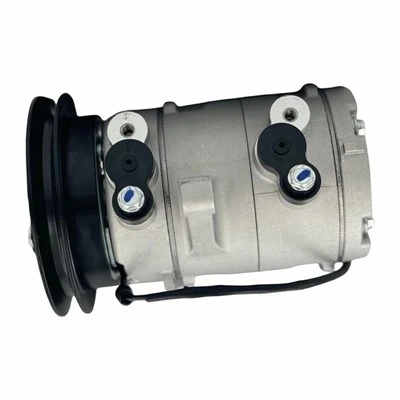
If you’re in the market for a new construction compressor, or you’re looking to upgrade your current setup to save fuel and reduce downtime, reach out to our team to talk through your job needs. We can help you find the right two-stage compressor with an intercooler sized for your worksite, whether you’re doing residential remodels, road demolition, or large commercial builds. We don’t do generic solutions – every compressor we supply is tailored to how construction teams actually use their equipment, and that includes making sure the intercooler is working as hard as you are. Don’t get stuck with a compressor that can’t keep up on a hot worksite – let’s talk about how a properly intercooled two-stage compressor can take your productivity to the next level.
Agricultural AC Compressor References
Compressed Air Gas Dynamics, 3rd Edition. CRC Press.
Construction Equipment Operation and Maintenance Handbook. McGraw-Hill.
Thermal Management of Industrial Compressors. Society of Manufacturing Engineers.
“Intercooler Performance in Two-Stage Reciprocating Compressors.” Journal of Energy Resources Technology, ASME, 2018.
Jiangsu Nuoyan New Energy Vehicle Air Conditioning Co., Ltd.
With abundant experience, we are one of the most professional construction compressor manufacturers and suppliers in China. We warmly welcome you to buy customized construction compressor at competitive price from our factory. Also, quotation is available.
Address: No. 7 Xingyuan Road, Huangqiao Economic Development Zone, Taixing City, Jiangsu
E-mail: nuyantech2026@163.com
WebSite: https://www.nuyantech.com/
